I am writing this on the 27th of June, one day after the Bitcoin Nairobi Conference closed. And I still can’t believe it has not even been a full year since the morning we first thought about bringing people together. The whole thing started with a walk. Let me tell you about the walk.
I Went Looking for the Builders
I founded Bitcoin Kampala, so I already knew, first-hand, what it takes to spark a circular economy from nothing. But in June last year I set out to tour the other Bitcoin circular economies of East Africa for the first time. Not to speak. Not to pitch. Just to meet the people who were quietly building them.
I started in Arusha, spending time with the builders at Bitcoin Arusha. Then I made my way to Nairobi. My goal was simple and a little stubborn: I wanted to understand, with my own feet and my own eyes, every community that was making Bitcoin work as money on this side of the continent.
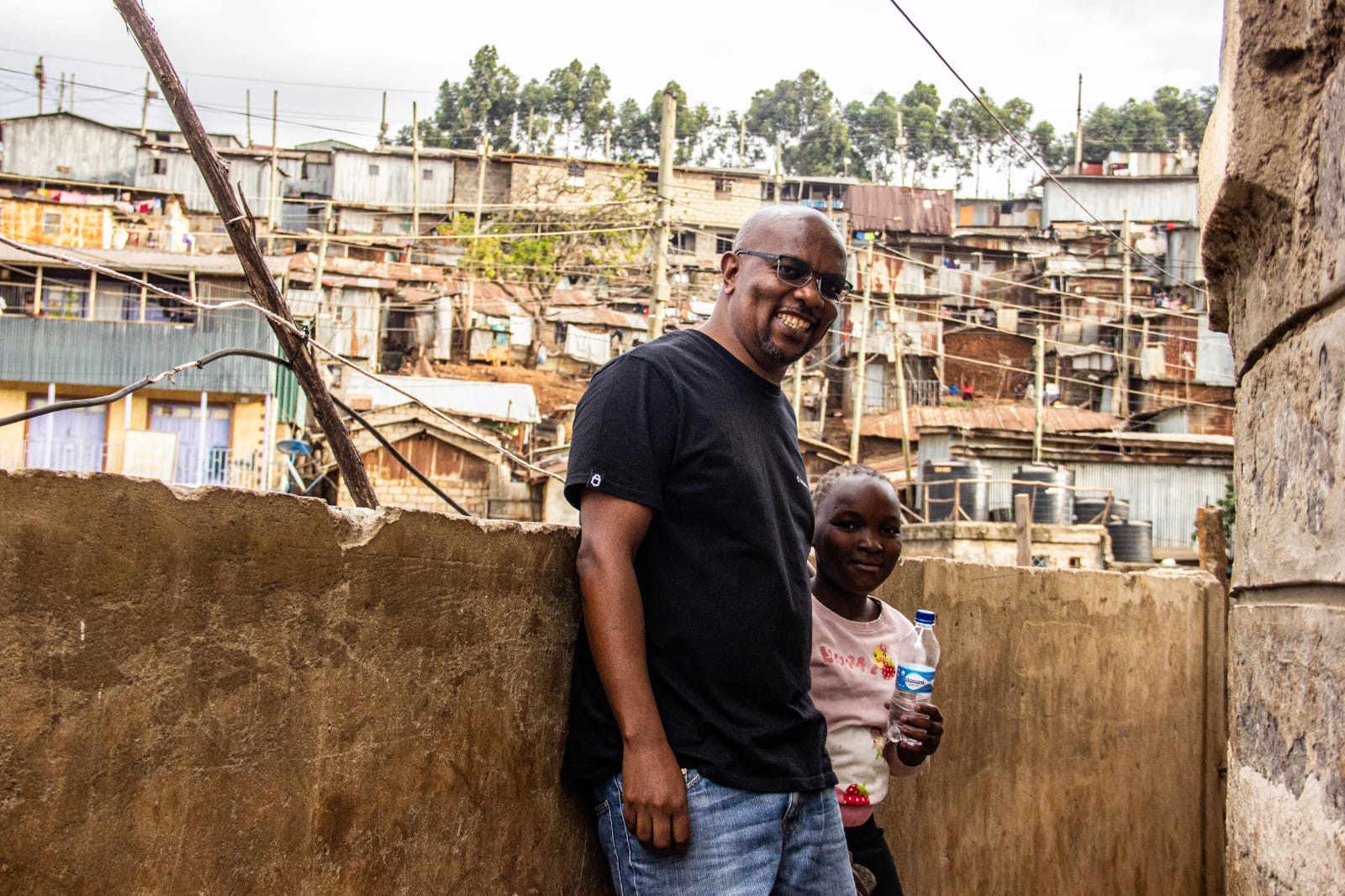
So when I reached Nairobi, I didn’t book a hotel. I chose to stay at the Mdawida Homestay — right next door to Afribit Kibera, the biggest Bitcoin project in East Africa and one of the biggest on the continent. I was hosted by Ronnie and Serah, the proprietors of Afribit Kibera, in their own compound.
I had asked Ronnie for one small favour: take us around the circular economy, just for a morning.
I still remember how casually I expected it to go.
The Morning Walk Through Bitcoin Valley
On my show-up, there was a lot more Bitcoin in Afribit Kibera than I had braced for.
The moment you start walking down what they call Bitcoin Valley, you are greeted by it — Bitcoin logos, hand-painted signs, QR codes taped to kiosks, charts on the walls. Signs that the community knows exactly what it is doing. There is even a waste-collection crew of young people earning sats for keeping one of the largest informal settlements in Africa clean.
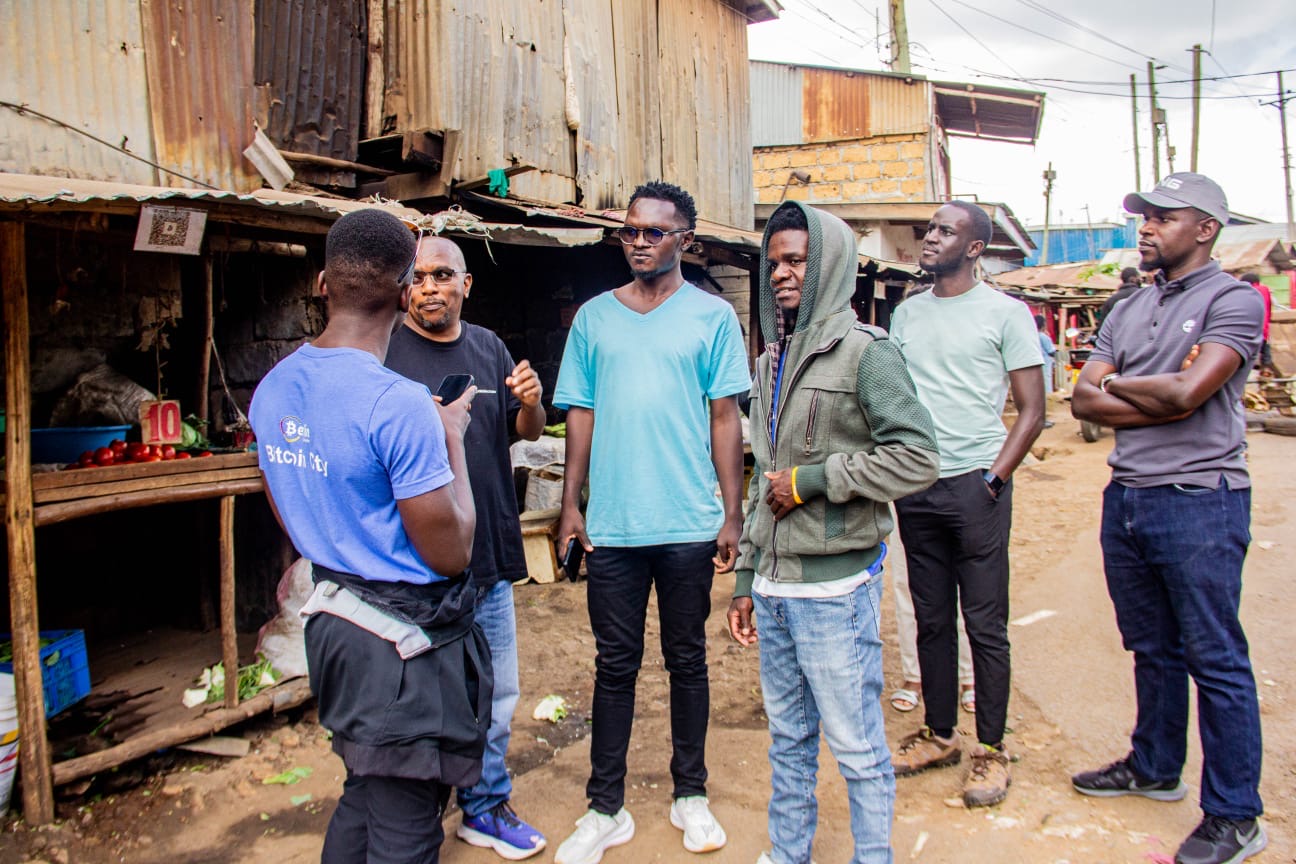
Ronnie took us almost vendor to vendor.
We walked into a boutique and paid Bitcoin for a vintage Manchester United jacket. We bought bananas from a grocery stand and paid in sats, scanning the code displayed right there on the stall. We reached a car wash that accepted Bitcoin — and there, our car was washed while we kept the journey going on foot. We stopped at a general merchandise shop and bought water with Bitcoin.
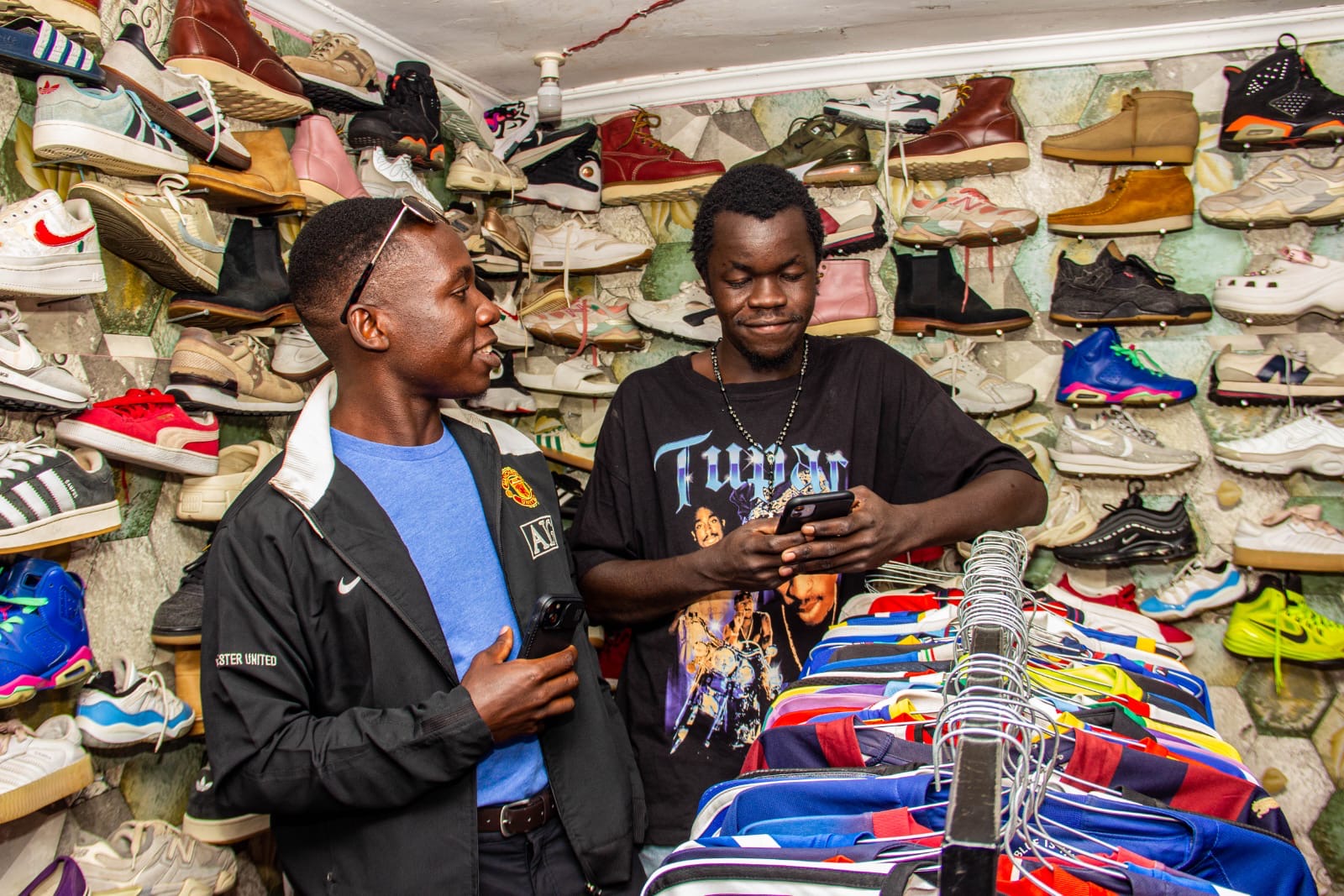
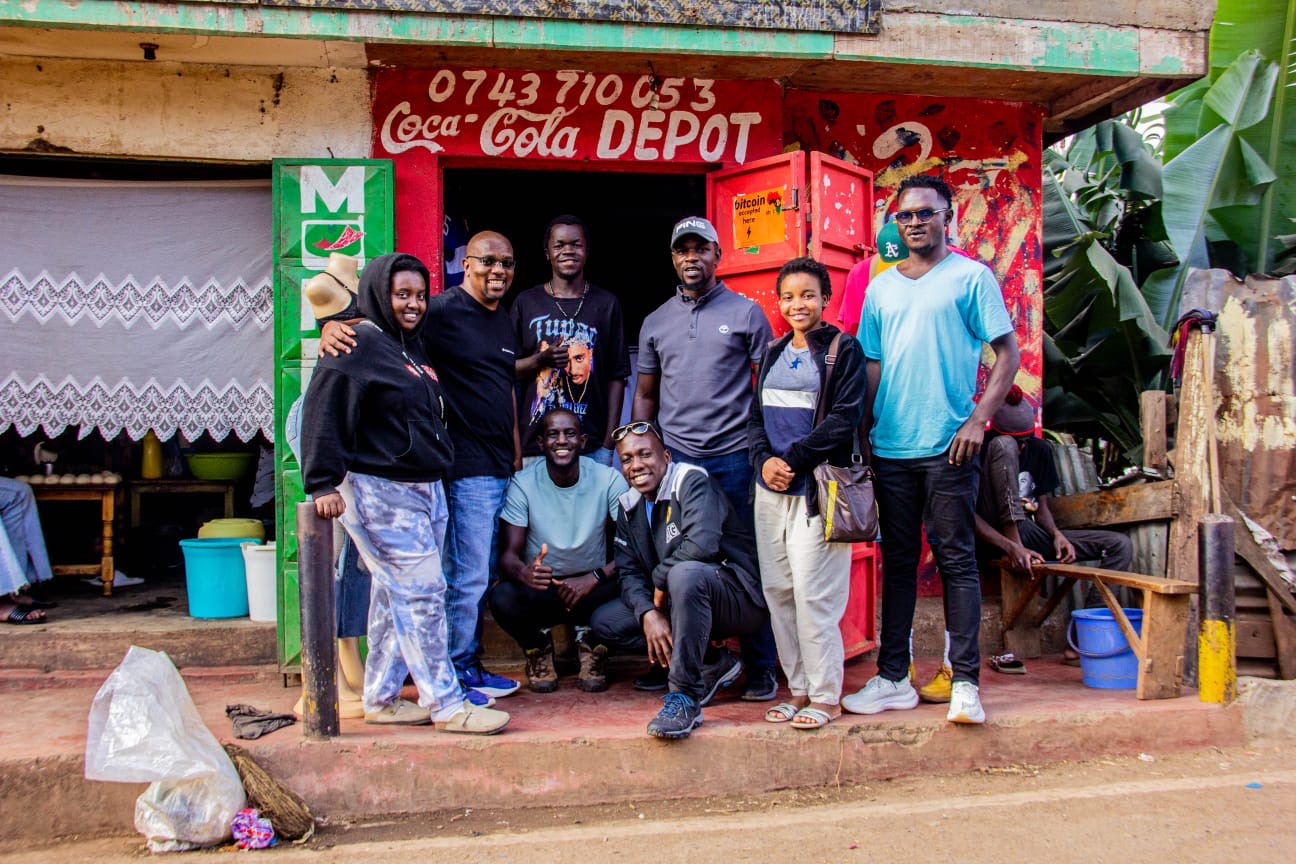
And then we met the most important person on that walk: Mitch — the very first merchant to ever adopt Bitcoin in Kibera, and now a key part of the Afribit Kibera project.
Standing there, I remember one thought looping in my head:
How is all of this impact happening, in real money, in real lives — and the world does not know?
The Thing That Caught My Soul
The nail on the head, for me, was the sheer business potential sitting inside Kibera.
All these entrepreneurs — disconnected from formal financial infrastructure, and yet carrying an enormous opportunity to make it. Bitcoin had already opened another door for them: another way to receive payments, another way to save, another way to transact among themselves.
I watched it happen. While we were in the boutique, one of the ladies who runs a grocery stand walked in and bought shoes — merchant paying merchant, all in sats, no bank in the middle.
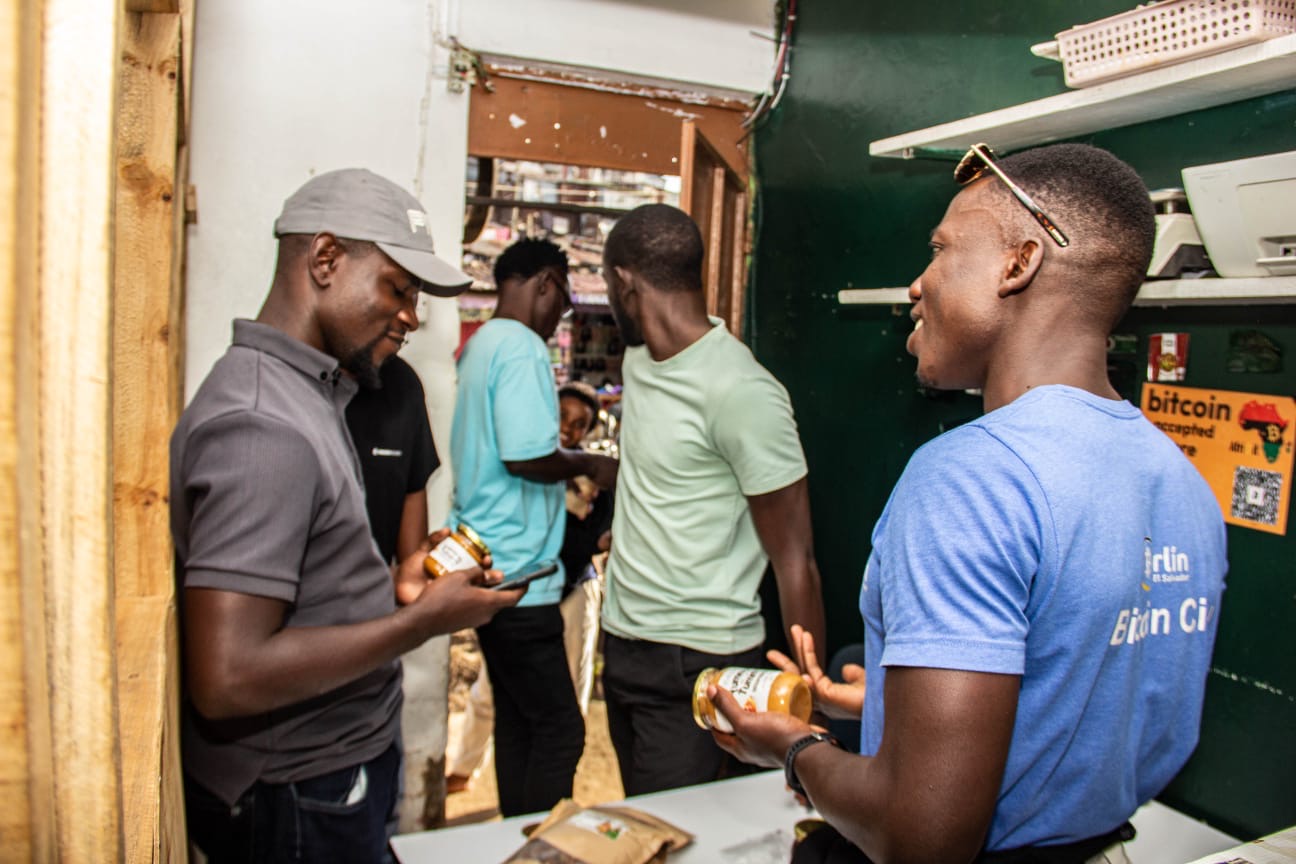
Something was compelling me to contribute to the framework the Afribit Kibera team had already set up. Not to replace it. To amplify it.
And then we went to eat.
We had food at Swahili Dishes, a restaurant owned by Rama. Watching the diligence of his service, the quality of his cooking — I will say it plainly: I have not had ugali and fish anywhere in the world as good as that.
By the time we got home that evening, I couldn’t hold the question in any longer.
“I’m Up For It, If You Are.”
Back at the compound that night — because I was still staying with Ronnie — I asked him: how do we showcase this? How do we let people see the Afribit Kibera community?
And then I proposed it. A conference.
Not a conference to bring the biggest of the big. A simple one. What if we brought some of the builders from Bitcoin Arusha? Some of the people from Bitcoin Kampala? Some from the other circular economies across East Africa — maybe the builders in Rwanda and Congo? What if we brought them to Kibera, and let them feel the same sense of responsibility, and the same sense of possibility, that I had just felt all morning?
Ronnie just smiled and said:
I’m up for it, if you are.
The next morning we sat in his compound with my laptop open and started brainstorming.
We chose a venue right next to the community — a fifteen-minute walk from Bitcoin Valley, the A.S.K. Dome. It was our venue from the very first sketch, for one reason we agreed on instantly: we wanted the community to be part of the conference. I remember saying it out loud — how awesome would it be for Swahili Dishes to sell their food at a Bitcoin conference? I was sure the Bitcoiners would love it.
From a Compound Sketch to a Date on the Calendar
So we went into conference-planning mode.
By October we had reached out to Josef Tětek of Trezor Academy — who, back in 2024, had experienced what a Bitcoin conference in Nairobi could be and wanted more. He had told me around that time that if we ever planned something, we should call him. We did. By October we had a proposal, we had shared it with him, and he had confirmed he would partner with us to make it happen.
We consulted a few other people, finding out what it actually takes to put on a conference. Our shared reference — the experience closest to what we wanted to create — was Adopting Bitcoin in Cape Town. So we decided to do it as an Adopting Bitcoin extension. We wrote the proposal and shared it with the team.
But October, November and December are the peak of Bitcoin conference season — Adopting Bitcoin in El Salvador, then the build-up to Adopting Bitcoin Cape Town in January. So that is where the world first heard about it: at Adopting Bitcoin Cape Town, where we announced Nairobi for the 24th to the 26th of June.
Six months out, announcing it to a room, here is the honest truth: we did not have much figured out. But the confidence we always carried was that the two hardest things were already solved.
We had the perfect venue.
We had the perfect community.
Everything in between — logistics, sound, photography — deep down I believed I could figure out. It turns out I was wrong about how much there was. There was a mountain of work inside the word “conference.” The Adopting Bitcoin team was generous in showing us a lot of it, and we put in the hours.
The most important decision came when we chose to go forward as the Bitcoin Nairobi Conference — an independent, Africa-led event under our own identity. We did this so we would not lose touch with what inspired us in the first place.
Putting together a Bitcoin conference, as a product, was never our thing. We did not want to assemble one. We wanted to build something that brought a community together — something that let people meet, share a search, share a laugh, and learn from each other.
I’ll be honest about what that choice cost. I am the founder of Bitcoin Kampala, and plenty of people — especially back home in Uganda — asked me why on earth we weren’t doing this in Kampala. It was a fair question, and choosing Kibera over my own city was a genuine sacrifice.
But Afribit Kibera was simply bigger than anything we had running in Kampala yet. You put the spotlight where the adoption is deepest, not where it is most convenient for your ego.
The Team That Squeezed Water From a Rock
If we ever get into the operational detail of how the conference actually ran, the first thing I want on the record is the team.
It has been an amazing partnership with Serah, who ran operations and turned out to be our de facto operations superhero. And it took a whole committee: Linda Kariuki holding speaker engagement together, Robert Kirubi working the networking and the donors, Josef Tětek on education, Kimberly on comms, Jason keeping the tech alive, Max in our corner as advisor, and so many more. Every one of them moved the needle, drastically, toward the success of those three days.
A conference does not happen to you. People build it, decision by decision, late night by late night.
Only One Money Changed Hands
Here is the highlight I am proudest of.
Every single vendor on site accepted Bitcoin — and only Bitcoin was transacted at the conference.
The cleaners. The waste-management partners. And yes, it makes me smile to write it: Swahili Dishes was our lunch service provider. The same Rama, the same ugali, now feeding a Bitcoin conference exactly as I had imagined out loud in that compound.
We did not hand out lunch. Instead, through a partnership with Paybee, we gave everyone sats — and to eat, you had to make a Bitcoin transaction. So even the people who had walked into the Bitcoin Nairobi Conference having never used Bitcoin in their lives got to feel, with their own hands, how the smallest everyday transaction can settle in sats.
You don’t learn Bitcoin from a keynote. You learn it the first time you buy your lunch with it.
And none of it happens without the partners and sponsors who believed in us, and in this mission, before there was anything to point to.
Two Days at the A.S.K. Dome
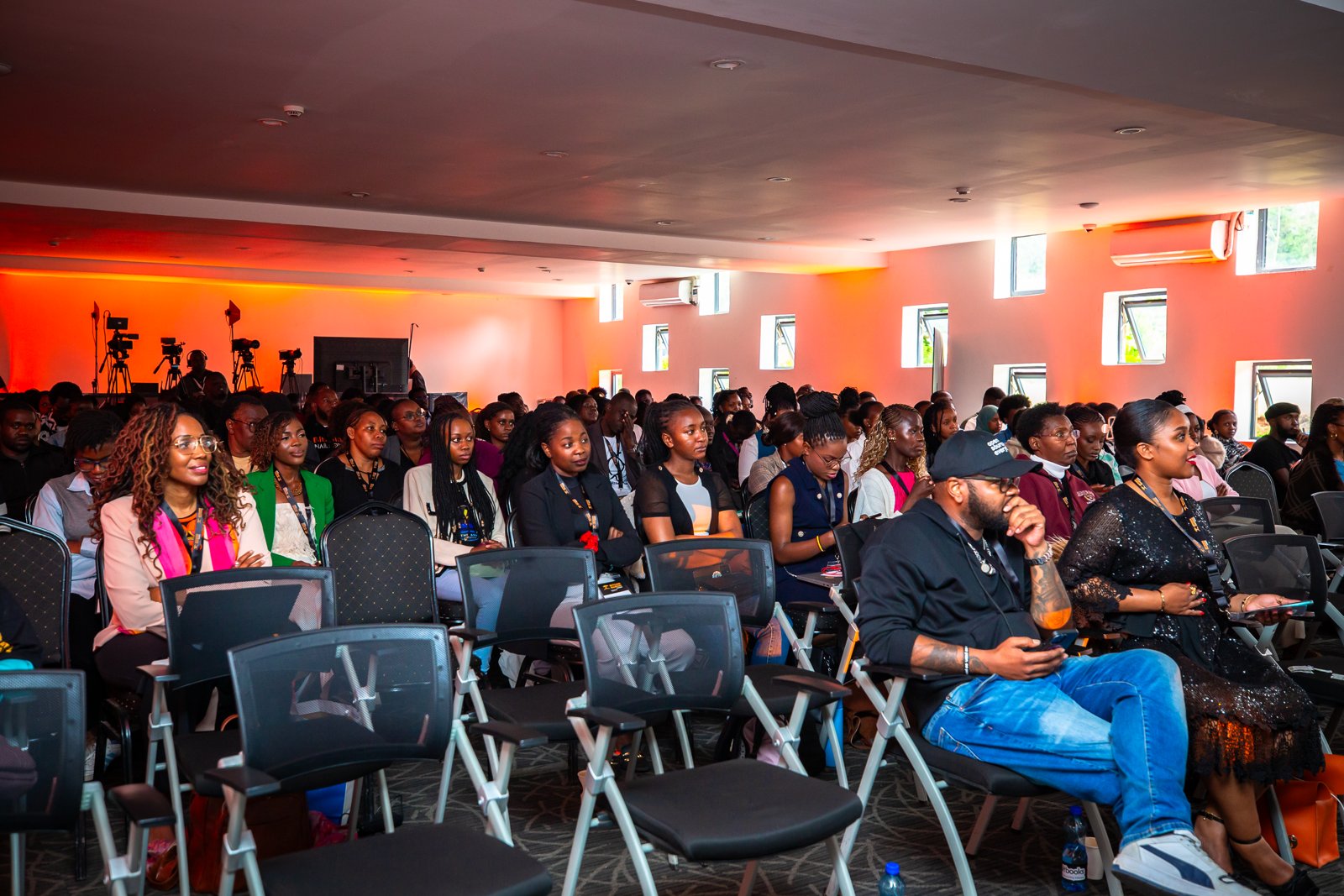
The conference turned out to be far bigger than the simple gathering we first sketched. More than 330 people came through the doors, from eight counties — under a banner we settled on together: Building the Future Bit by Bit.
Across two days at the Dome we ran 41 sessions — 17 on the main stage, The Genesis Block, and 24 in the breakaway rooms, The Node and The Satoshi Room, with three stages running at once. Eleven keynotes. Around 69 people took the stage, from 53 organisations. Six panels, nine talks, four workshops, two fireside chats, a deep dive, a demo, an open mic — and nine moments of pure culture: spoken word, drumming, dance, live music, and the BitBiashara Next Gen kids.
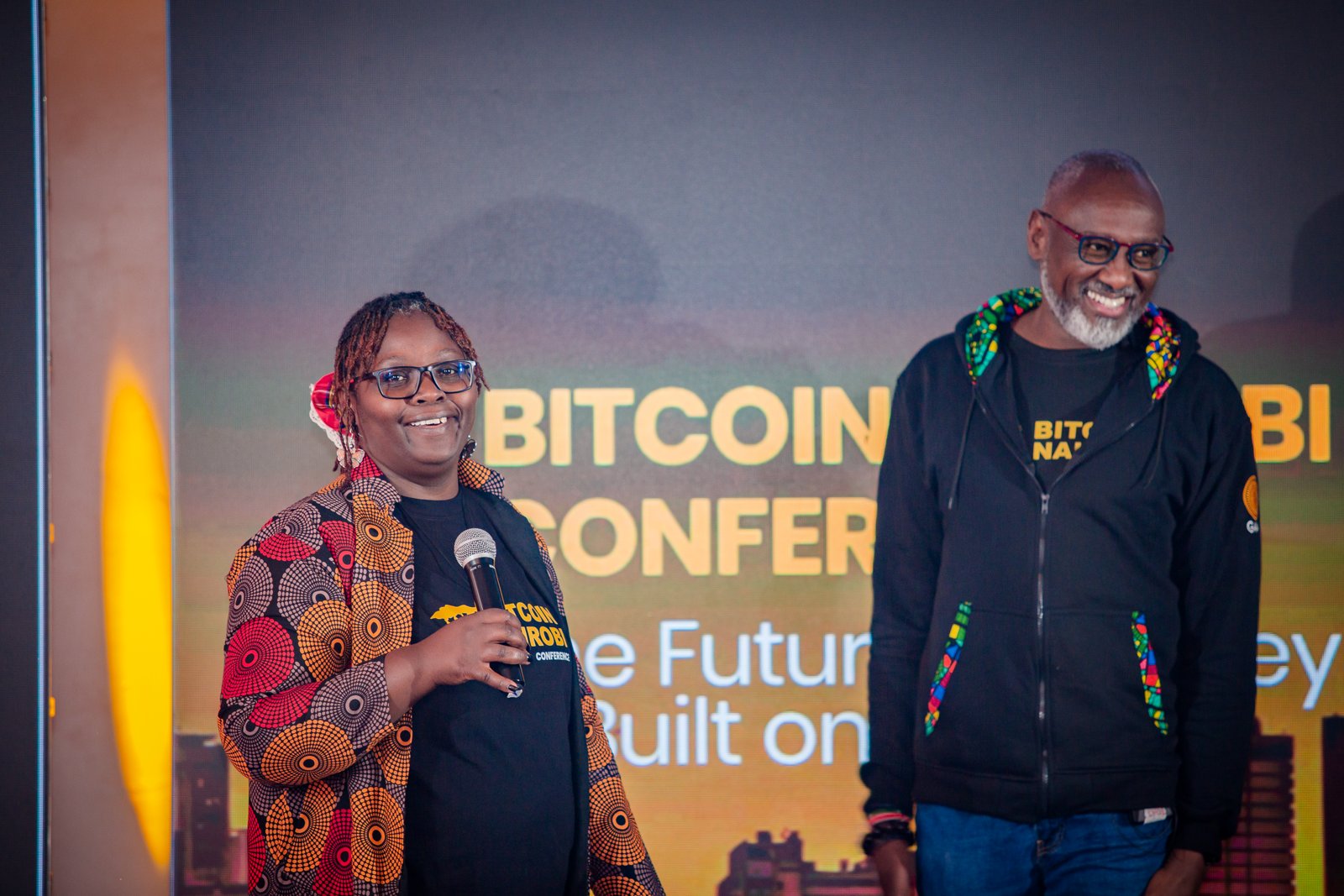
The threads ran exactly where we hoped they would. Circular economies, live and on stage: Afribit Kibera, Bitcoin Babies, the Bitcoin Chama, BitBiashara. Women leading from the front: the Bitcoin Dada community, the Satoshi Sister Circle, Bitcoin SheLeads. Builders and developers: Btrust, BitDevs, Machankura, Fedimint. Real tools for real businesses, and voices from across Kenya, Uganda, Tanzania, Burundi, Nigeria and South Africa — alongside friends from El Salvador, the US, India, Pakistan and Latin America.
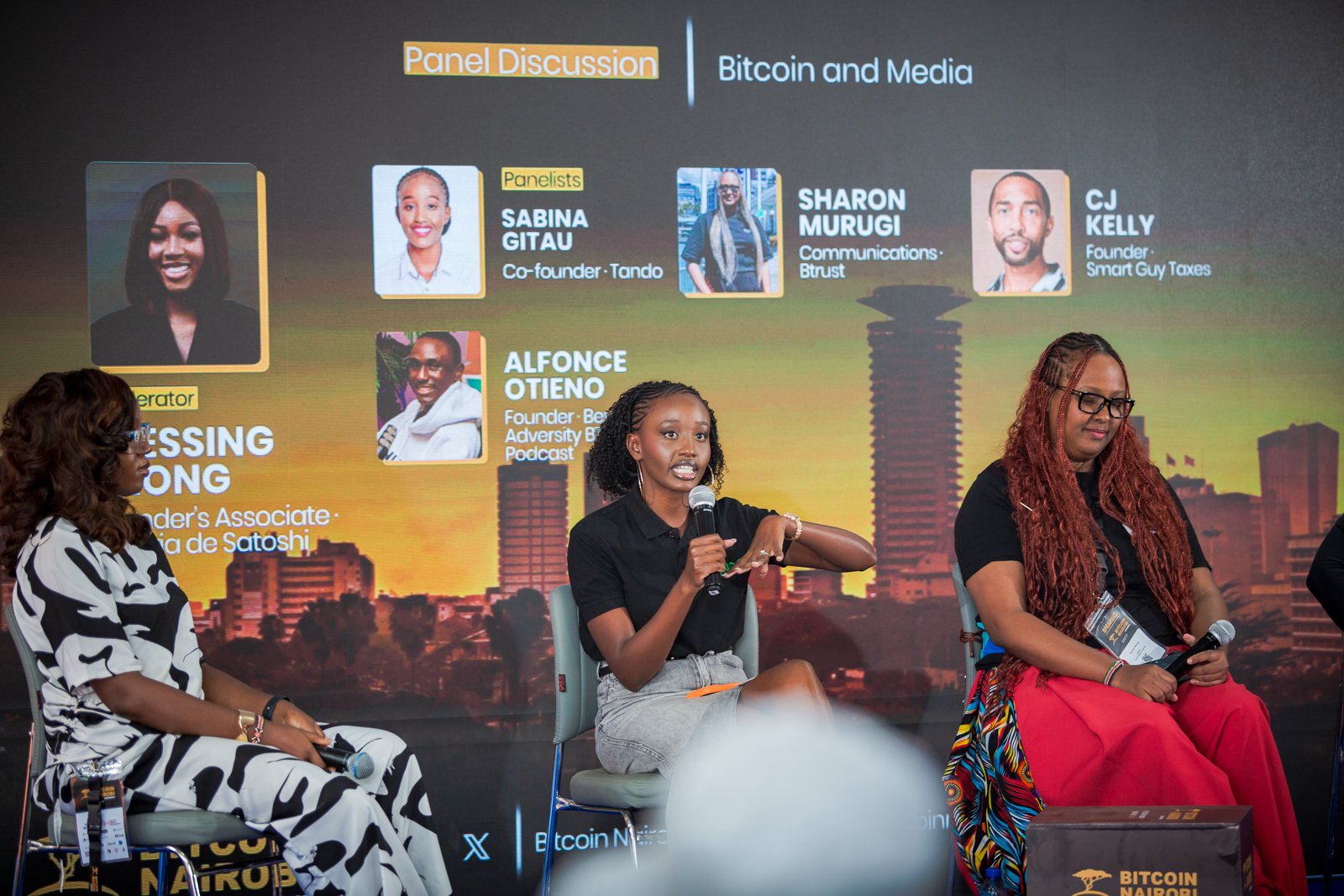
From Trezor Academy’s Josef Tětek opening the title-sponsor keynote, to Bitcoin Ekasi’s Hermann Vivier on building a circular economy from nothing, to Btrust’s work putting African developers at the centre of Bitcoin itself — the rooms were full and the conversations were real.
And the website held. Sixty updates shipped to the conference site — 34 in the final three-week sprint alone. Every speaker swap and last-minute change went live in minutes: 65 headshots, 131 files, a live “happening now” schedule. The unglamorous machinery nobody sees, holding steady under the whole thing.
Day Three: We Walked the Whole Thing Into Kibera
And then came the day that mattered most to me.
Day three of the Bitcoin Nairobi Conference was, as far as I know, the first ever Bitcoin walking conference. Instead of meeting in a typical conference facility, we met on site — where the adoption actually lives, in Kibera. We replicated, and even expanded, the exact walk Ronnie had taken me through in June 2025.
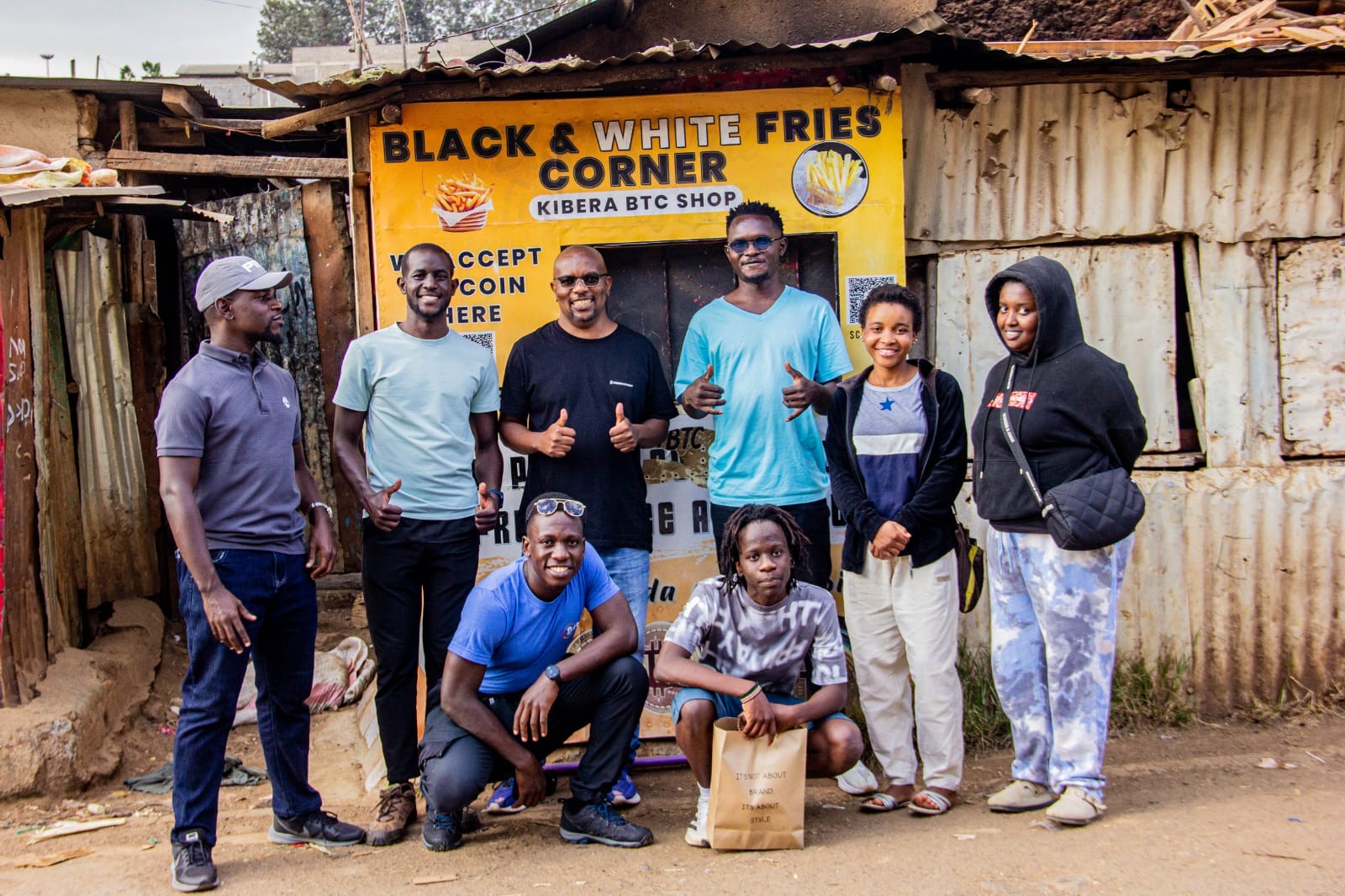
People got to experience what Bitcoin means for this community. And most of them could not believe it — that the same asset they had been told was all about saving and investment was being used, right in front of them, as daily money.
The boda boda riders parked their bikes for a full day, just to display Bitcoin logos on them at the event. There was dance. There was food. There was happiness. The community painted a mural, a lasting marker of a movement that is still growing.
There was something about the whole thing that reminded me of family. The keynotes were intimate. The panels were detailed. It felt less like an industry event and more like a small, big family reunion — people coming together to share a meal, work through the hard internal questions, and learn from one another.
And This Is Only the First One
The Bitcoin Nairobi Conference was never meant to be a single city on a single weekend. The vision now is a chain of smaller gatherings feeding into one big conference every year.
Picture a 50-to-100-person Bitcoin Arusha conference. A Bitcoin Kampala conference. Each one running this same model — bringing together the builders inside one country, then inviting a handful of guests from the other East African circular economies to come and share what they know.
And every one of those becomes a build-up — a tributary flowing into the final conference that happens once a year.
Small rooms feeding a big one.
Countries feeding a region.
One Day After
I write this on the 27th of June, one day after the conference ended, and I still can’t believe it has not even been a full year since Ronnie and I first sat in his compound and dreamed it up.
The success speaks for itself. But I won’t pretend it was easy. It was nothing short of squeezing water out of a rock.
We came to Kibera to be seen. We ended up building something the whole of East Africa could stand inside.
And it all started with a walk.
Don’t wait for permission.
Start with the community in front of you.
The rest is just work — and work, we can do.
* * *
To Ronnie and Serah, to Mitch and Rama, to Serah’s ops team, to every vendor who took sats, and to every soul who walked into Kibera and let it change their mind — thank you. We are only getting started.
Notes & sources
Bitcoin Nairobi Conference 2026 · Afribit Kibera · This Is Africa — “The calendar held” · CIO Africa · Capital FM · Techish Kenya. Day-1 and day-2 statistics from the BNC 2026 closing-keynote brief. Photographs from the June 2025 first tour of Afribit Kibera.
Contact: brindon@gorilla-sats.com | brindonmwiine.com
Share this article: